
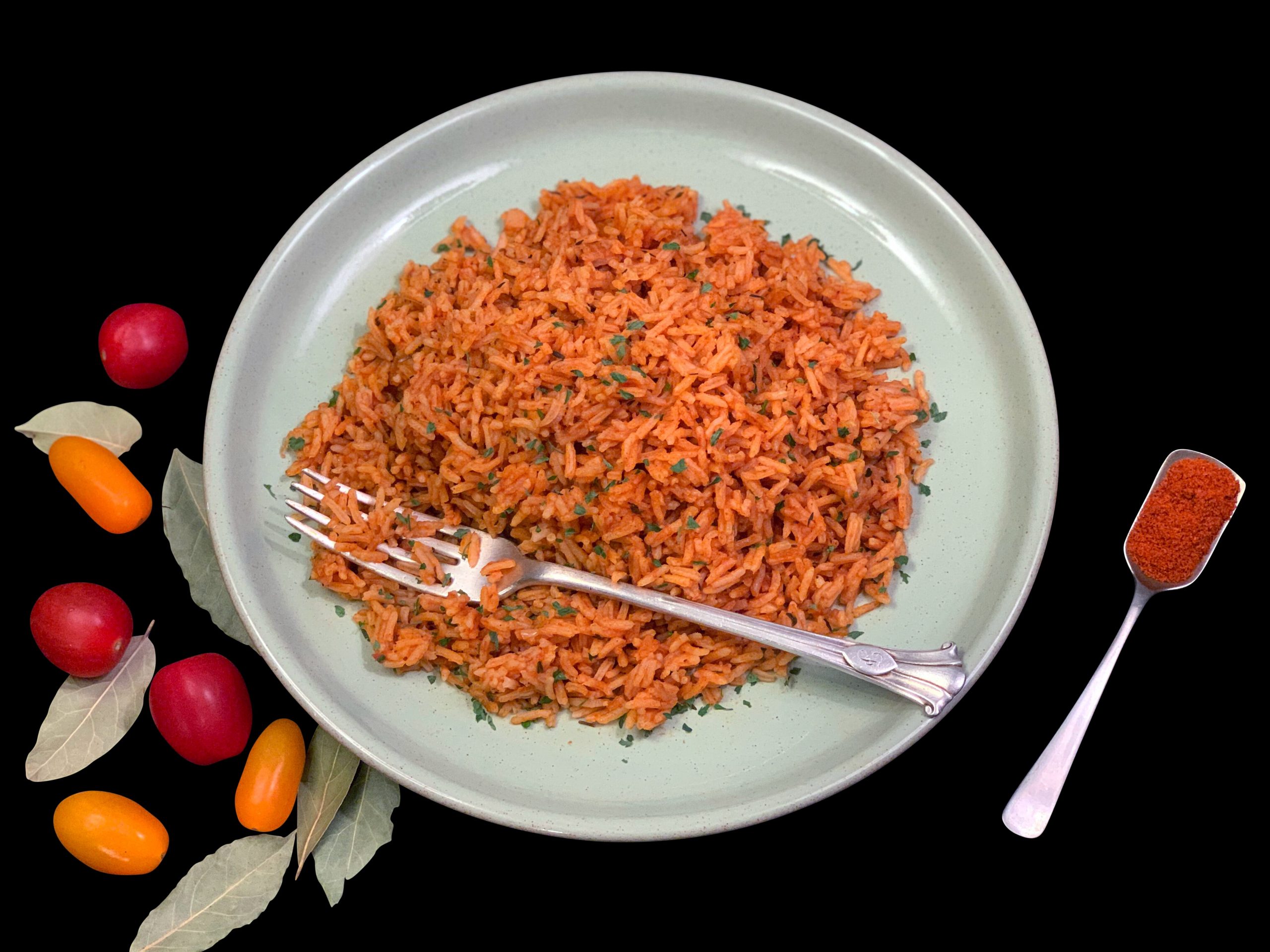
There are certain culinary aromas that possess the rare ability to command a room. The scent of deeply caramelised onions, rich roasted tomatoes, and warming spices drifting through the air is more than enough to stop most West Africans in their tracks. It is the unmistakable, magnetic fragrance of Jollof rice.
This vibrant, ruby-red dish has evolved to become significantly more than just a meal. It is a powerful symbol of celebration, cultural identity, and, perhaps most famously, fiercely passionate, friendly rivalry.
Across West Africa and the global diaspora, absolutely few foods inspire as much intense devotion as Jollof rice. Mention it at a crowded family gathering, a summer wedding, or a weekend dinner party, and before long, the conversation will inevitably pivot into a highly animated debate about which country prepares it best. Ask a Ghanaian, a Nigerian, a Sierra Leonean, or a Senegalese home cook whose version reigns supreme, and you are highly unlikely to ever receive the same answer twice.
Yet, despite the endless, playful competition, Jollof rice remains one of the region’s most beloved and unifying culinary traditions. It is the ultimate anchor of the table, bringing people together around a shared appreciation for deep flavour, family, and the joy of a shared feast.
A Dish with Deep Historical Roots: The Jolof Empire
To truly understand the reverence for this dish, you have to look at its origins. The story of Jollof rice stretches back centuries to the historic Senegambia region, which encompasses present-day Senegal and The Gambia. Culinary historians widely trace the dish’s genesis to the powerful Jolof Empire, an influential kingdom that flourished between the 13th and 15th centuries.
It is widely accepted that the earliest iteration of the dish known traditionally as “Thieboudienne” was first prepared by the Wolof people. Interestingly, originally made using barley or millet, the recipe gradually, inevitably evolved to incorporate rice as shifting global trade routes and agricultural advancements transformed food production across the West African coast.
Over time, the dish travelled, adapting effortlessly to local, indigenous ingredients, specific cooking traditions, and regional cultural preferences. The result is a sprawling, beautiful family of recipes that share common ancestral roots while fiercely maintaining their own distinct, national identities.
Why Jollof Holds a Sacred Place in West African Culture
In the vast majority of West African households, Jollof rice is entirely synonymous with celebration.
Whether you are attending an elaborate wedding, a university graduation, a vibrant naming ceremony, or a simple Sunday family gathering, there is an absolute certainty that a massive, steaming pot of Jollof rice will be placed at the very centre of the table. For many, a celebration simply does not officially begin until the Jollof is served.
Its enduring popularity stems not only from its incredibly rich, savoury flavour profile but also from its logistical brilliance. Large, generous batches can be prepared relatively economically to feed massive crowds, making it the ultimate dish for communal sharing.
The Famous Jollof Wars: A Culinary Rivalry
One of the most entertaining and enduring debates in global food culture centres on a single, highly controversial question: “Who makes the absolute best Jollof rice?”
“Nigerian Party Jollof” is globally celebrated for its aggressive, smoky flavour profile. This is traditionally achieved by cooking enormous pots outdoors over open firewood, deliberately allowing the bottom layer of rice to burn slightly (the highly coveted “bottom pot”) to infuse the entire dish with a rich, charred aroma.
“Ghanaian Jollof” is instantly recognised for its fluffy, separated grains (often using basmati or jasmine rice) and its incredibly vibrant red-orange colour, heavily reliant on a deeply spiced, slow-cooked meat and tomato stew base.
“Sierra Leonean Jollof” often favours a slightly simpler, more restrained approach, allowing richly flavoured, separate stews and heavy meat accompaniments to take centre stage on the plate.
“Senegalese Jollof” (“Thieboudienne”) remains closest to the historical origins, frequently incorporating fresh fish, broken rice, and a heavy array of root vegetables cooked directly in the broth.
This fierce, ongoing debate has become so ingrained in popular culture that it has officially earned its own moniker: the “Jollof Wars.” While the rivalry is legendary, it is almost exclusively carried out with great humour and deep national pride rather than genuine malice.
A Global Phenomenon
What was once a strictly regional, West African favourite has exploded into a massive international phenomenon.
Today, exceptional Jollof rice can be found in high end restaurants and vibrant street food markets across Europe and North America. Dedicated food festivals, intense cooking competitions, and cultural events regularly feature the dish, introducing entirely new audiences to one of West Africa’s greatest, most influential culinary exports. Its popularity has even inspired the creation of World Jollof Day, highlighting the profound cultural significance of a dish that continues to effortlessly connect people across borders.
How to Serve the Ultimate Jollof
Part of the magic of Jollof rice is its role as the ultimate canvas. While it is robust enough to be enjoyed entirely on its own, it is traditionally paired with a specific variety of delicious, contrasting accompaniments.
The Essential Sides:
Perfectly Fried Plantains (Dodo): The sweet, caramelised edges perfectly cut through the savoury, spicy heat of the rice.
Creamy Coleslaw: A cooling, crisp contrast to the warm spices.
Grilled or Fried Proteins: Crispy fried fish, heavily spiced grilled chicken, or tender, slow-cooked beef and goat stew.
More Than Just Rice
Jollof rice is so much more than a simple list of ingredients. It is a vibrant, living dish woven tightly into the very fabric of West African life, carrying generations of history, migration, loud celebration, and fierce community pride.
Whether you ultimately favour the aggressive, smoky flavours of a Nigerian Party Jollof, the bright, vibrant character of the Ghanaian version, the comforting, elegant simplicity of Sierra Leone, or the deep historic roots of Senegal, one thing remains absolutely certain: Jollof rice has rightfully earned its crown as one of the world’s most iconic, deeply cherished culinary masterpieces.
The Recipe: Classic, Flavourful Jollof Rice
If you have never attempted to make Jollof rice at home, this streamlined, highly reliable recipe is the perfect entry point. It delivers the essential rich tomato flavour, fragrant, earthy spices, and perfectly cooked grains that capture the true essence of the dish.
Preparation Time: 15 minutes | Cooking Time: 45 minutes
Serves: 4–6
The Ingredients
The Tomato Base:
- 1 tin (400g) chopped plum tomatoes (or 6 large, very ripe fresh tomatoes)
- 1 large red onion, roughly chopped
- 4 plump garlic cloves, peeled
- 1 whole Scotch bonnet chilli (Leave whole for subtle flavour, or blend it in for authentic, fiery heat)
- 1 teaspoon traditional chilli powder
- The Rice & Aromatics:
- 400g premium basmati or long-grain parboiled rice (thoroughly rinsed until the water runs completely clear)
- 2 tablespoons vegetable or sunflower oil
- ½ large red onion, very finely diced
- 2 tablespoons rich tomato purée (paste)
- 1 teaspoon dried thyme
- 2 fresh bay leaves
- 500ml rich vegetable or chicken stock
- 1 teaspoon fine sea salt (adjust to taste)
- Fresh parsley, finely chopped, for the garnish
The LaQuein Touch: While traditional recipes call for standard dry chilli powder, I always swap it out for a generous, heaped spoonful of my own artisan chilli paste. Stirring a high quality, complex chilli paste directly into the frying onions creates a slow building, deeply resonant heat and a layer of savoury depth that dry powders simply cannot replicate.
The Method
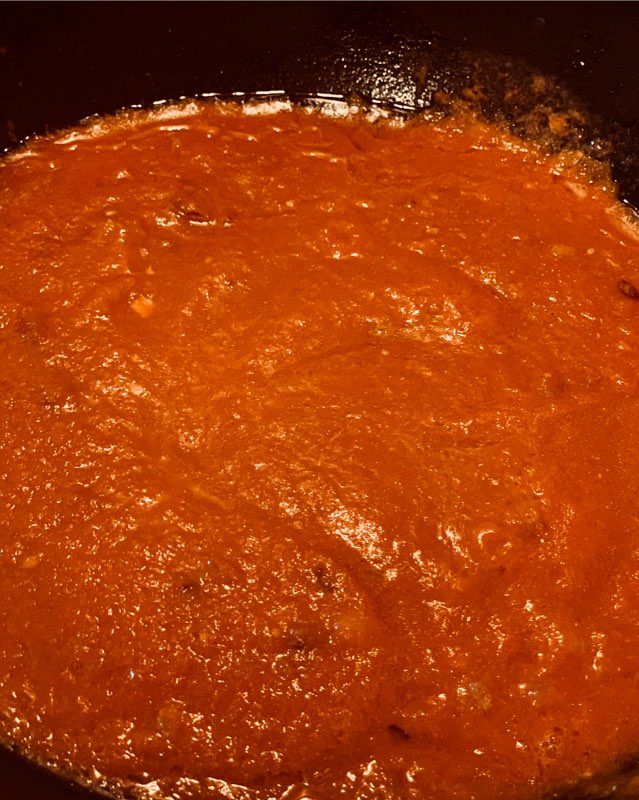
1. Blend the Base: In a high-powered blender, combine the tinned tomatoes, the roughly chopped onion half, the peeled garlic cloves, and the chilli powder (and the Scotch bonnet, if you are blending it for maximum heat). Blend until completely smooth and velvety.
2. Fry the Aromatics: Heat the vegetable oil in a large, heavy-bottomed saucepan or Dutch oven over a medium heat. Add the finely diced red onion and the salt. Cook gently for 2 to 3 minutes until softened and translucent.
3. Cook the Purée: Add the tomato purée to the softened onions. Fry this mixture for about 3 minutes, stirring constantly. Frying the purée removes its raw, metallic acidity and deepens the red colour of your final dish.
4. Reduce the Stew: Pour the blended tomato mixture from step one directly into the saucepan. Add the dried thyme and your artisan chilli paste if using. Stir well, cover loosely, and allow it to simmer vigorously for 5 to 7 minutes until it reduces slightly and the oil begins to rise to the surface.
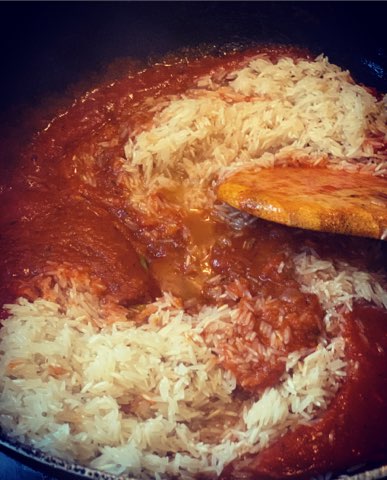
5. Add the Rice: Pour the thoroughly washed rice into the rich tomato stew. Stir vigorously to ensure every single grain is heavily coated in the red sauce.
6. The Gentle Simmer: Pour in the chicken or vegetable stock, add the bay leaves, and drop in the whole Scotch bonnet chilli (if you kept it whole for flavour). Stir once, then cover the pot with a tight-fitting lid. Tip: Place a piece of foil over the pot before adding the lid to trap all the steam Jollof is steamed, not boiled.
7. The Waiting Game: Reduce the heat to its absolute lowest setting. Leave the rice to cook completely undisturbed for 35 to 40 minutes. Do not open the lid to check it, or you will release the vital steam.
8. Fluff and Serve: Once the liquid is entirely absorbed and the grains are tender, turn off the heat. Remove the bay leaves and the whole chilli. Gently fluff the rice with a fork, garnish generously with fresh parsley, and serve immediately alongside sweet, fried plantains.
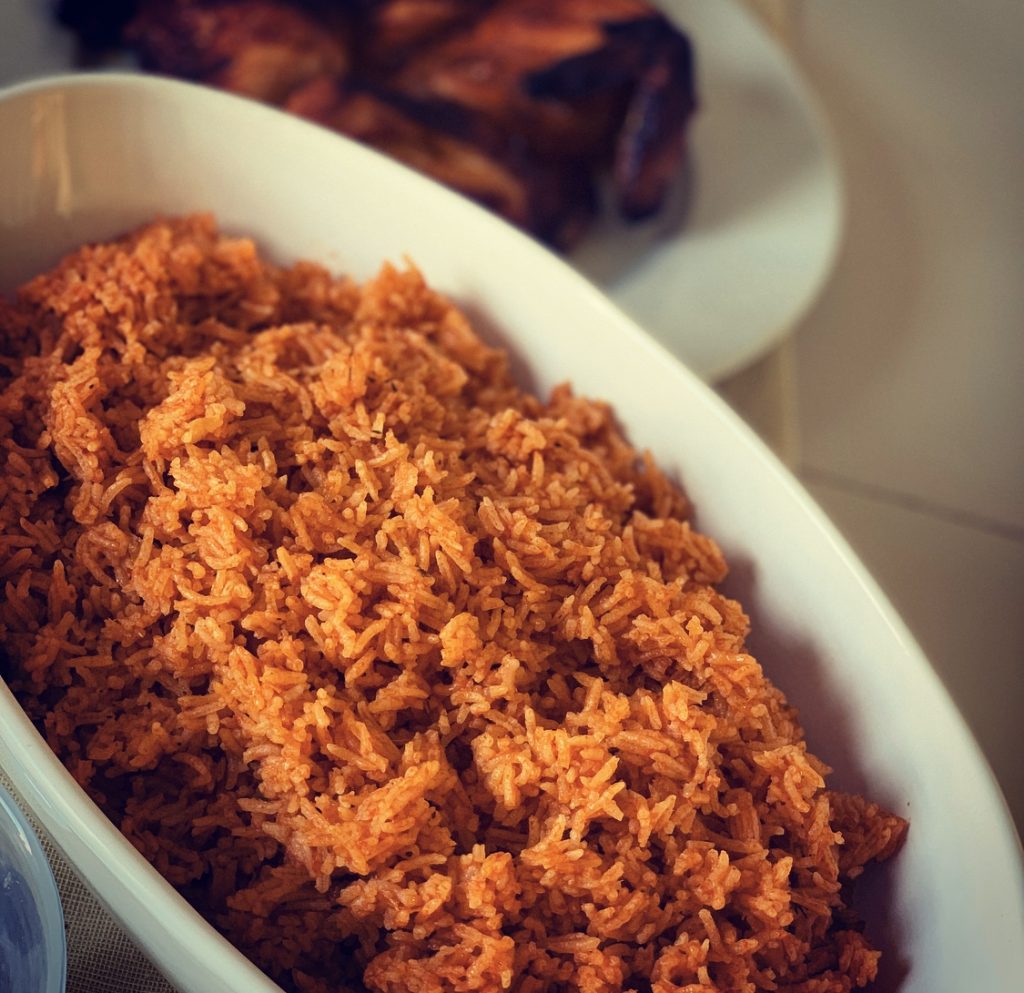

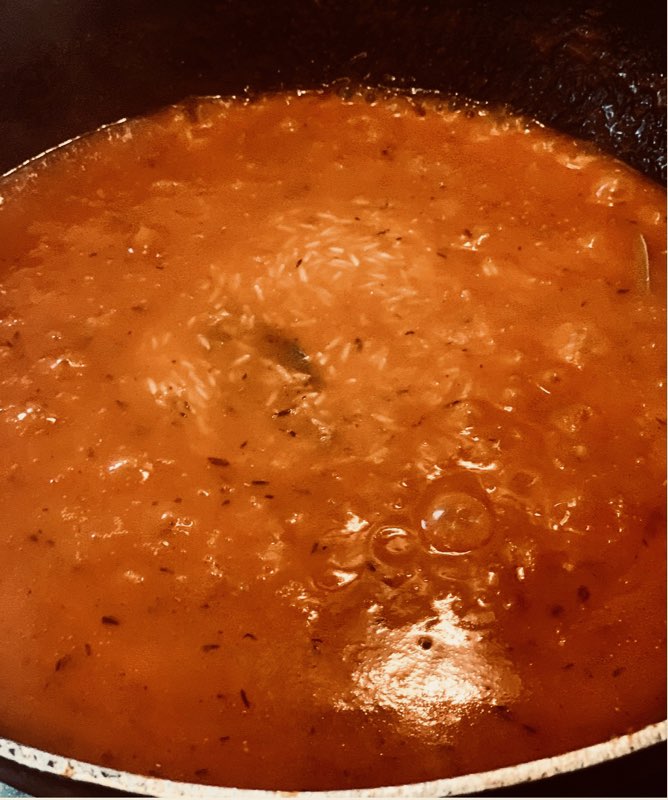


Jollof Rice

Jollof rice has been a popular food in most countries. I have always wanted to taste that unique one. i had a new perspective and definitely some hints to prepare it on my own. Thanks, Amigo!
Oh yes it has. Enjoy!
The recipe calls for self-rising flour — when is it used? and what for?
Hi Victoria,
It was an error but I’ve made the adjustment.
Thanks for spotting this out!