
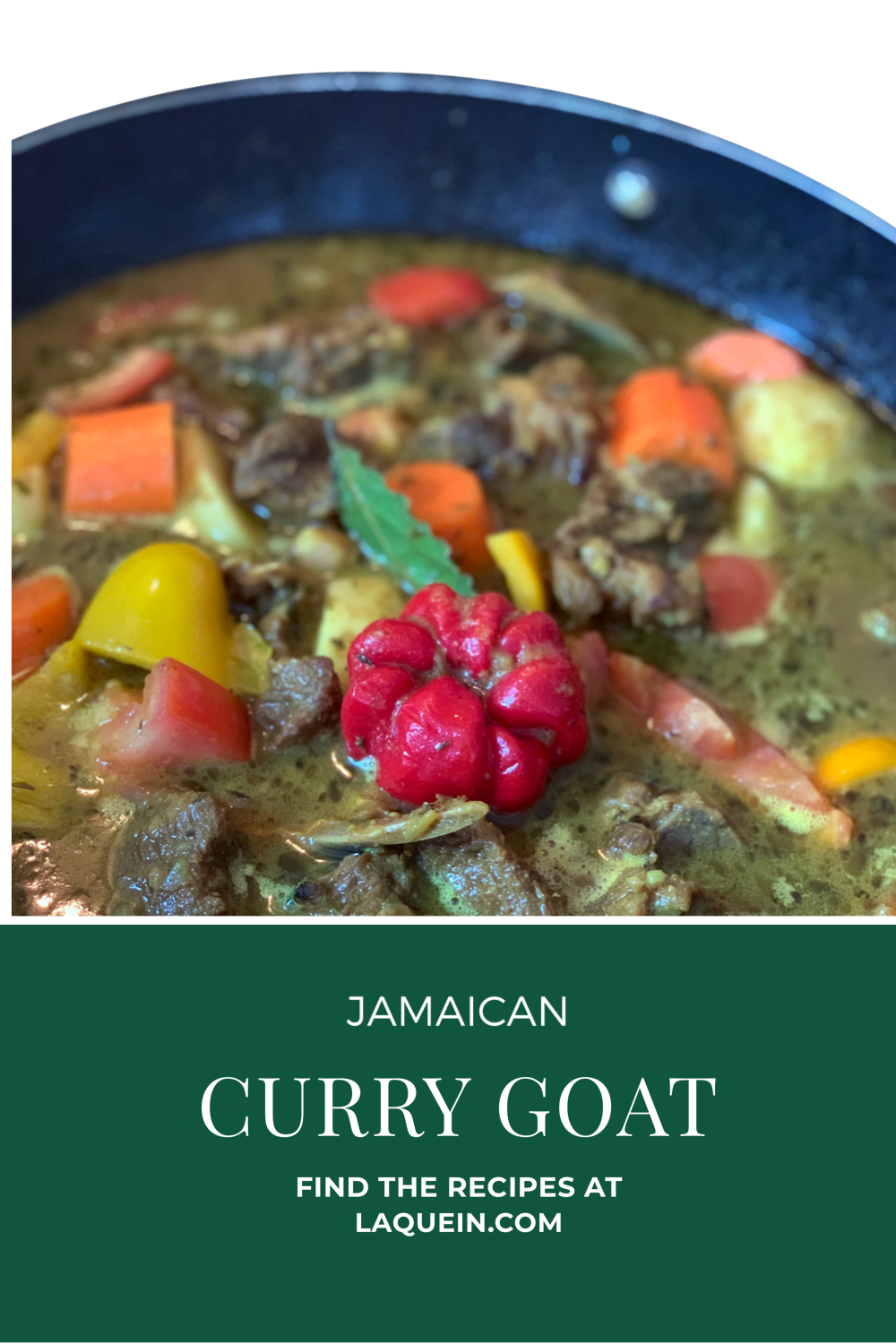
There are certain dishes that do significantly more than simply satisfy hunger. They evoke deep rooted memories, anchor social gatherings, and create moments of profound comfort that linger long after the plates are cleared. Whether it is a chaotic family gathering or a quiet, restorative Sunday at home, the right meal possesses the power to completely shift the atmosphere of a room.
While I constantly explore different global cuisines, I invariably find myself returning to dishes that are uncompromising in flavour and heavily steeped in tradition. At the absolute top of that list is authentic Jamaican curry goat. It is a meal that fundamentally embodies everything brilliant about Caribbean cooking; bold, unashamed flavours, highly aromatic spices, methodical slow cooking, and the rare ability to command a table.
If you have never experienced a genuinely well-executed Jamaican curry goat, prepare to discover a dish that will recalibrate your standards for comfort food. Exceptionally tender cuts of meat are slowly simmered in a fragrant, complex sauce infused with fresh herbs and warming spices. The result is a rich, restorative stew that crucially tastes even better the following day.

Why This Dish Matters: A Masterclass in Patience
Jamaican curry goat is one of the Caribbean’s most culturally significant dishes, traditionally serving as the centrepiece for weddings, major celebrations, and the sacred Sunday dinner. Unlike rapid, high-heat weeknight meals, this is a recipe that demands and rewards patience. The slow, low-heat cooking process is non-negotiable; it allows the connective tissue in the meat to break down until it is incredibly tender, whilst simultaneously absorbing the deep flavours of the seasoning.
What makes the Jamaican iteration unique is its highly distinctive spice profile. Jamaican curry powder differs fundamentally from traditional Indian blends. It relies on a significantly higher proportion of turmeric, which imparts the dish’s signature brilliant golden colour and deep, earthy baseline.
For many Caribbean families, the aroma of this curry filling the house on a weekend morning is as much a part of the cultural fabric as the meal itself. It signals that people are gathering, and that there is absolutely no rush.
What You’ll Need: Sourcing the Right Ingredients
The brilliance of this dish lies in its relative simplicity. The complexity of the flavour comes not from a convoluted ingredient list, but from allowing high-quality components the time to develop naturally.
The Overnight Marinade
3 lbs (1.4kg) goat meat, cut into bone-in chunks (the bone marrow adds immense depth to the sauce)
1 large onion, roughly sliced
4 garlic cloves, finely minced
1 tbsp fresh ginger, grated
2 tbsp Jamaican curry powder
1 tsp turmeric
1 tsp dried thyme (or 1 tbsp fresh thyme leaves)
1 tsp whole pimento berries (allspice)
1 tsp sea salt & ½ tsp black pepper
The Stew Base
2 tbsp vegetable oil
1 tbsp curry powder (reserved for “burning”)
2 carrots, chopped
2 spring onions, roughly sliced
4 medium tomatoes, chopped
1 yellow bell pepper, diced
2 bay leaves
4–6 additional whole pimento berries
1 scotch bonnet pepper (Optional, but highly recommended for authentic heat. Leave it whole if you want the flavour without the aggressive spice.)
2 vegetable or chicken stock cubes dissolved in 4 cups water
1 large potato, peeled and cut into large chunks
The Method: How to Build the Perfect Curry
The secret to an exceptional curry goat lies entirely in the preparation. This is not a process you can rush.
1. Marinate the Meat
Place the goat meat into a large, non-reactive bowl. Add the onion, garlic, ginger, curry powder, turmeric, thyme, salt, and black pepper. Massage the spices thoroughly into the meat until every piece is heavily coated. Cover tightly and refrigerate for at least four hours, though an overnight marination will yield a significantly deeper, more developed flavour.
2. Burn the Curry and Brown the Meat
Remove the meat from the refrigerator 30 minutes before cooking to take the chill off. Heat the vegetable oil in a heavy-bottomed Dutch oven over medium heat. Add the remaining tablespoon of curry powder directly to the hot oil and stir continuously for 30 seconds. This traditional technique often referred to as “burning” the curry releases the essential oils and removes any raw, powdery taste. Add the marinated meat (reserving the onions in the bowl for now) and brown aggressively on all sides for 5 to 7 minutes to build the foundational flavour base.
3. Build the Stew Base
Once the meat is browned, add the reserved onions from the marinade bowl, along with the spring onions, tomatoes, bell pepper, bay leaves, and the whole scotch bonnet pepper. Stir well to combine, then pour in the stock. Bring the pot to a gentle boil, immediately reduce the heat to its lowest setting, cover tightly, and leave to simmer for approximately 2 hours, checking occasionally.
4. The Final Reduction
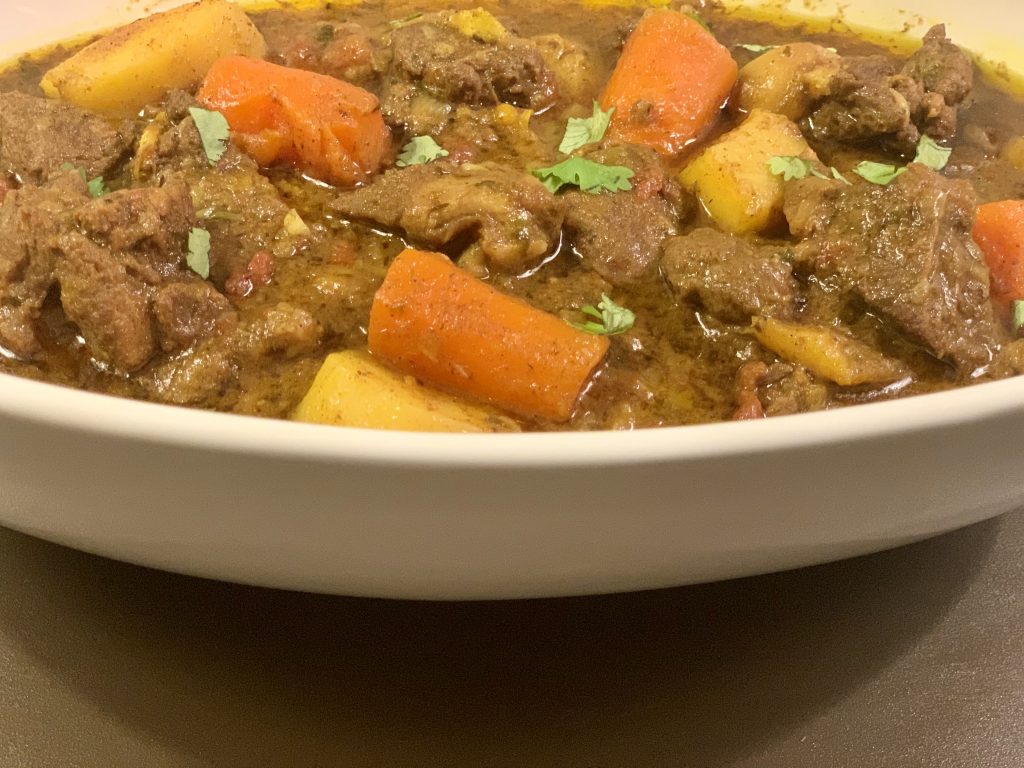
After 2 hours, the meat should be yielding. Add the carrots and the potato chunks. Continue cooking uncovered for an additional 30 to 40 minutes. As the potatoes soften and break down slightly, their natural starches will thicken the sauce, creating that rich, clinging consistency that defines a top-tier curry goat. Taste, adjust the seasoning if necessary, and let the pot rest off the heat for 10 minutes before serving.
Health Benefits: Lean, Nutrient-Dense Comfort
While curry goat is universally viewed as an indulgent comfort food, the core ingredient actually offers a surprisingly robust nutritional profile.
Compared to standard commercial beef or lamb, goat meat is naturally significantly leaner and contains less saturated fat, whilst remaining incredibly rich in high-quality protein. It is also an excellent source of dietary iron, potassium, and vitamin B12. When combined with the anti-inflammatory properties of fresh ginger, garlic, and turmeric-heavy curry powder, the dish operates as a highly nutrient-dense meal.
The Verdict: The Power of the Slow Simmer
What I respect most about Jamaican curry goat is that it forces you to slow down.
In an era of twenty-minute meal kits and instant delivery, this dish unapologetically demands your patience. There is something deeply grounding about allowing a heavy pot to simmer gently for hours while the complex, spicy aroma gradually takes over the entire house. It is the type of cooking that naturally draws people into the kitchen lids are lifted for illicit taste tests, and conversations flow more easily leaning against the counter.
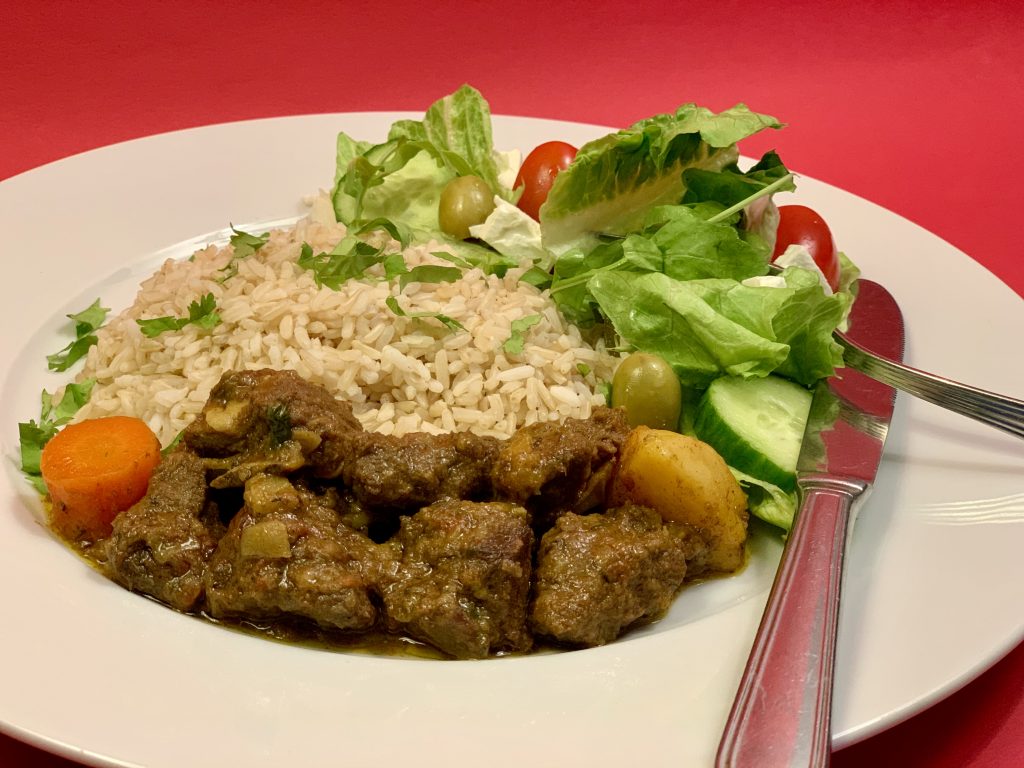
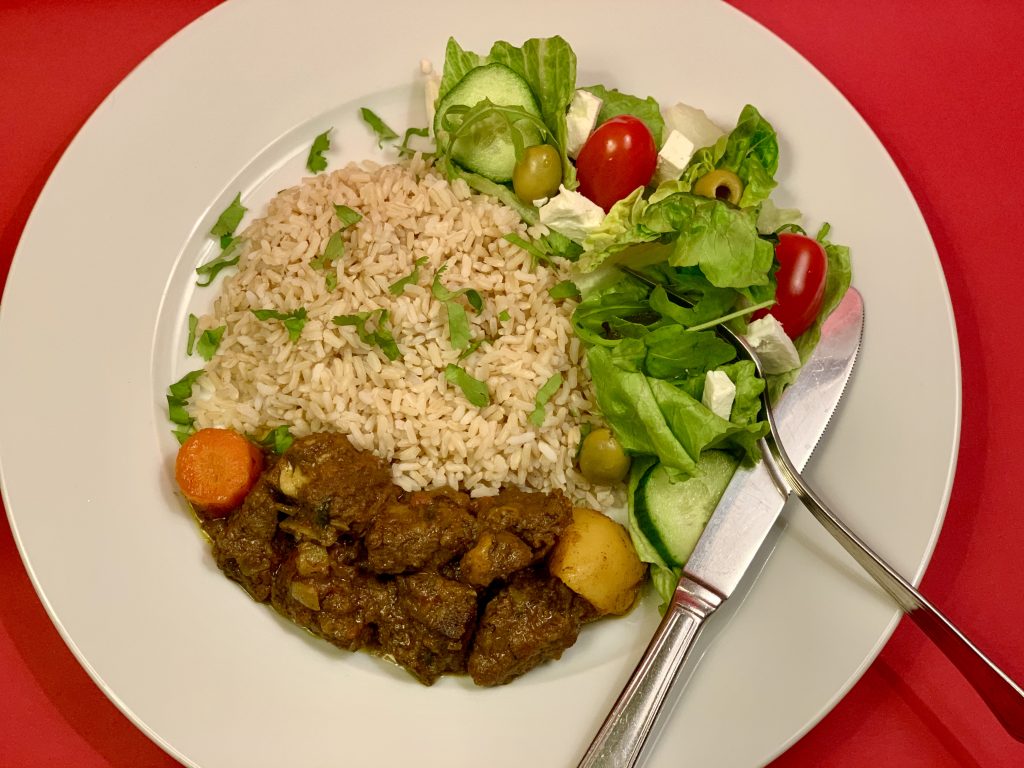
Served alongside a mound of steaming rice and peas, it delivers precisely what food of this calibre should: aggressive flavour, profound warmth, and a genuine sense of occasion. It is more than just a recipe; it is a ritual entirely worth sharing.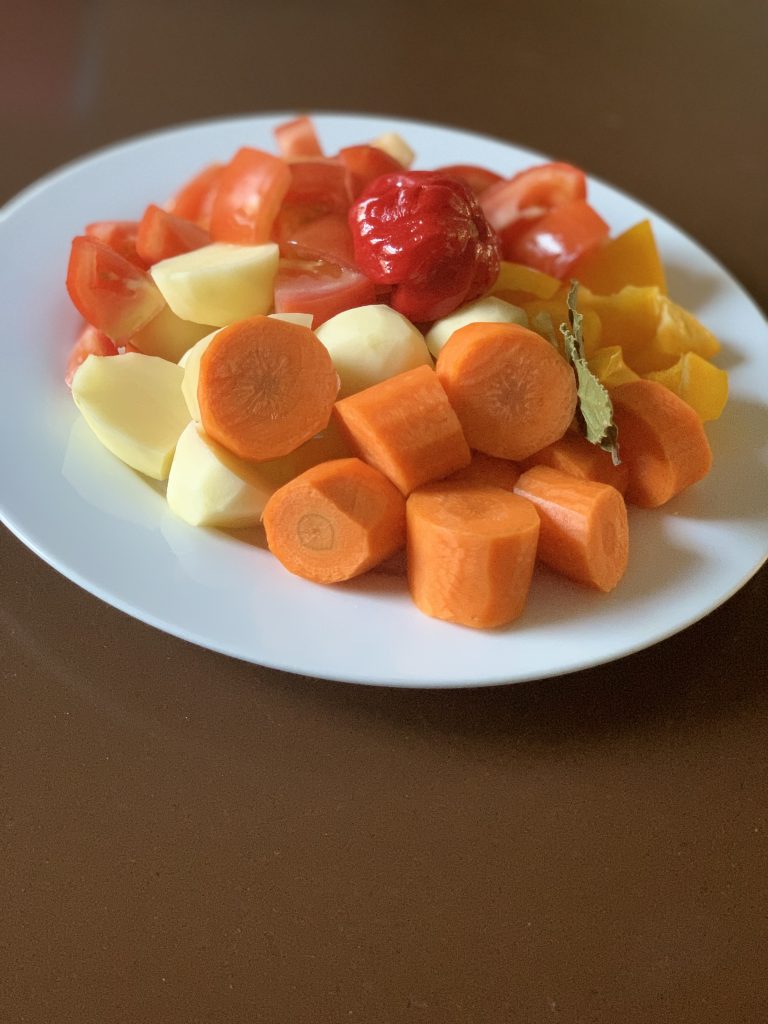

Please share this recipe it looks delicious! Can you also provide printable recipes?
Sure!